Daydream Made
One Back Office for a Blind-Date Bookshop
One web app for the hand work behind every wrapped book: describing it without giving it away, printing its label and cover, deciding what to buy, and tracking sales everywhere the shop sells.
The Problem
Daydream Made sells books on a blind date: each one is wrapped so you can’t see the title or the author, and you choose it from what’s printed on the wrap and shown in the online listing (genre, mood, pace, spice level, and content notes). That promise creates a lot of hand work behind the scenes.
Every book has to be researched and described without giving itself away. Every book needs a printed wrap label and a “blind” cover image for its listing. Restocking means going through a catalogue of thousands of titles, book by book, to decide what’s worth ordering. The stock on the shelves and in the consignment booths has to be counted and valued for the accountant. And sales come in from the web store, market days, and the booths, each reporting in its own way.
Done by hand, all of it competes with the part of the business that’s actually fun.
What Was Built
One web app the shop’s staff open in a browser, with a section for each job. One rule runs through all of it: AI does the research and the first draft, and a person makes every decision that matters.
- Describing each book. It pulls new books from Airtable, has AI research each one on the web, and proposes its tags: subjects, moods, pace, genre, content notes, and a short synopsis. A person reviews and edits them, and nothing is written back until they approve. A tag that would give away the title, the author, or the series is refused.
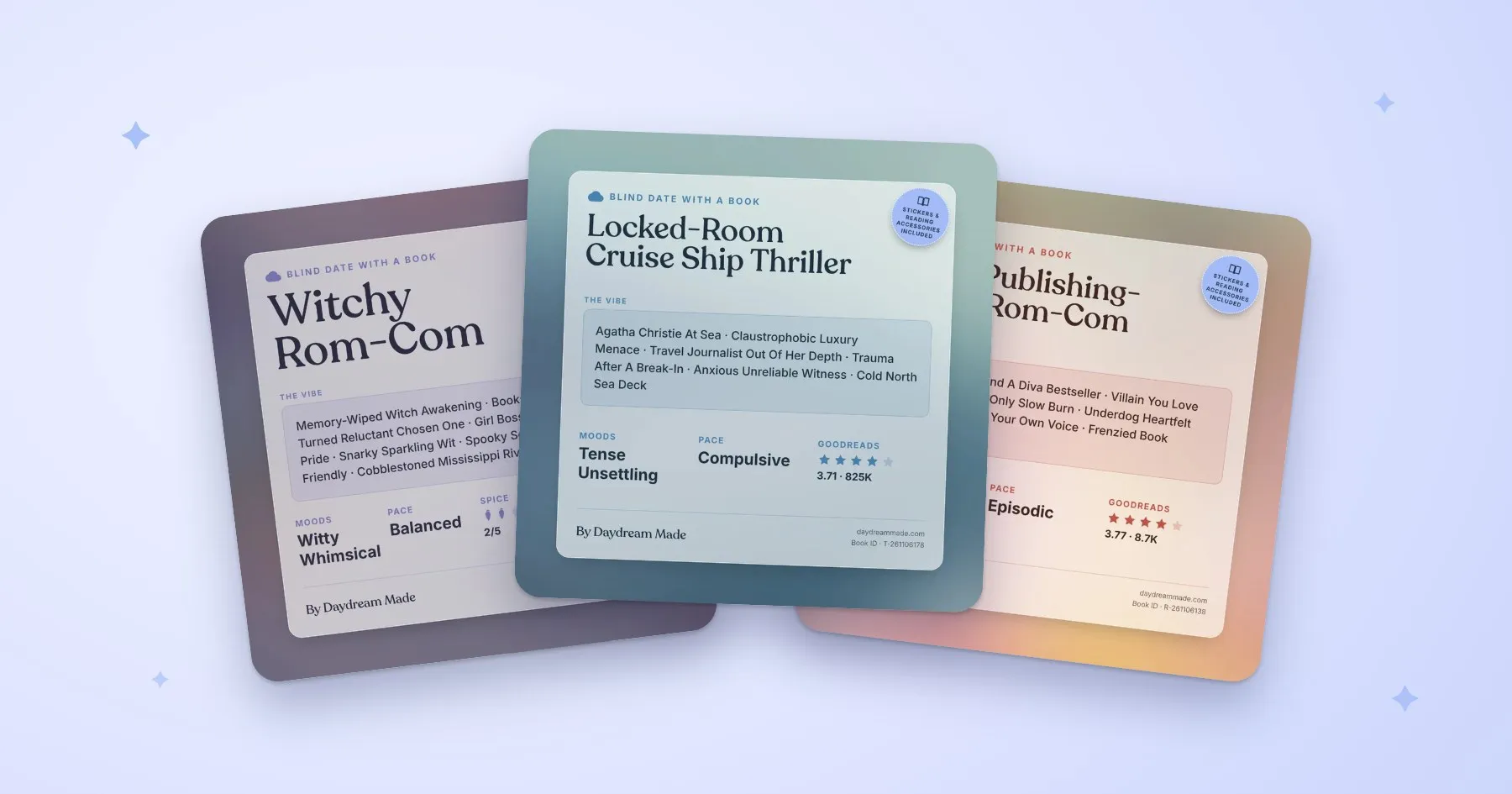
- Labels and covers. Each book’s record becomes its printed wrap label and its blind listing cover (the picture above: a label card over an unreadable blur of the real jacket), rendered in-house from locked designs rather than through a design subscription.
- Buying. Upload a supplier’s catalogue spreadsheet and it clears out the obvious misfits for free, then has AI screen the rest against the shop’s own written buying guide, in batches at half the price. A person approves or rejects each book, and the approved ones become a shopping list ready to paste into the supplier’s cart.
- Stock counts. A count of every shelf and booth, valued at what the books actually cost, with a file ready for the accountant.
- Sales from everywhere. Web orders, market days, the old till’s history, and the consignment booths’ daily reports land in one dashboard: any stretch of time against last week or last year, forecasts that show how accurate they’ve really been, and every market day side by side with the same show last year. A day of sales is kept only if it adds up to its report’s own total, to the cent.
What Changed
The hand work is mostly checking now, not typing. AI drafts the descriptions and screens the catalogue, and a person reads, edits, and decides.
The jobs live in one place, instead of in a design subscription and a separate report from every place the shop sells. The Blind Date promise is protected by the system itself rather than by memory: the tool won’t approve anything that names a book. And the numbers hold up: stock valued at what it cost, and sales that match their reports to the cent.
It’s the same pattern I bring to client work: AI where it saves time, a person wherever judgment matters, and one place to run it all from.